
News & Events
Stay Safe Online: Cyber Security Awareness for Women in the Digital World
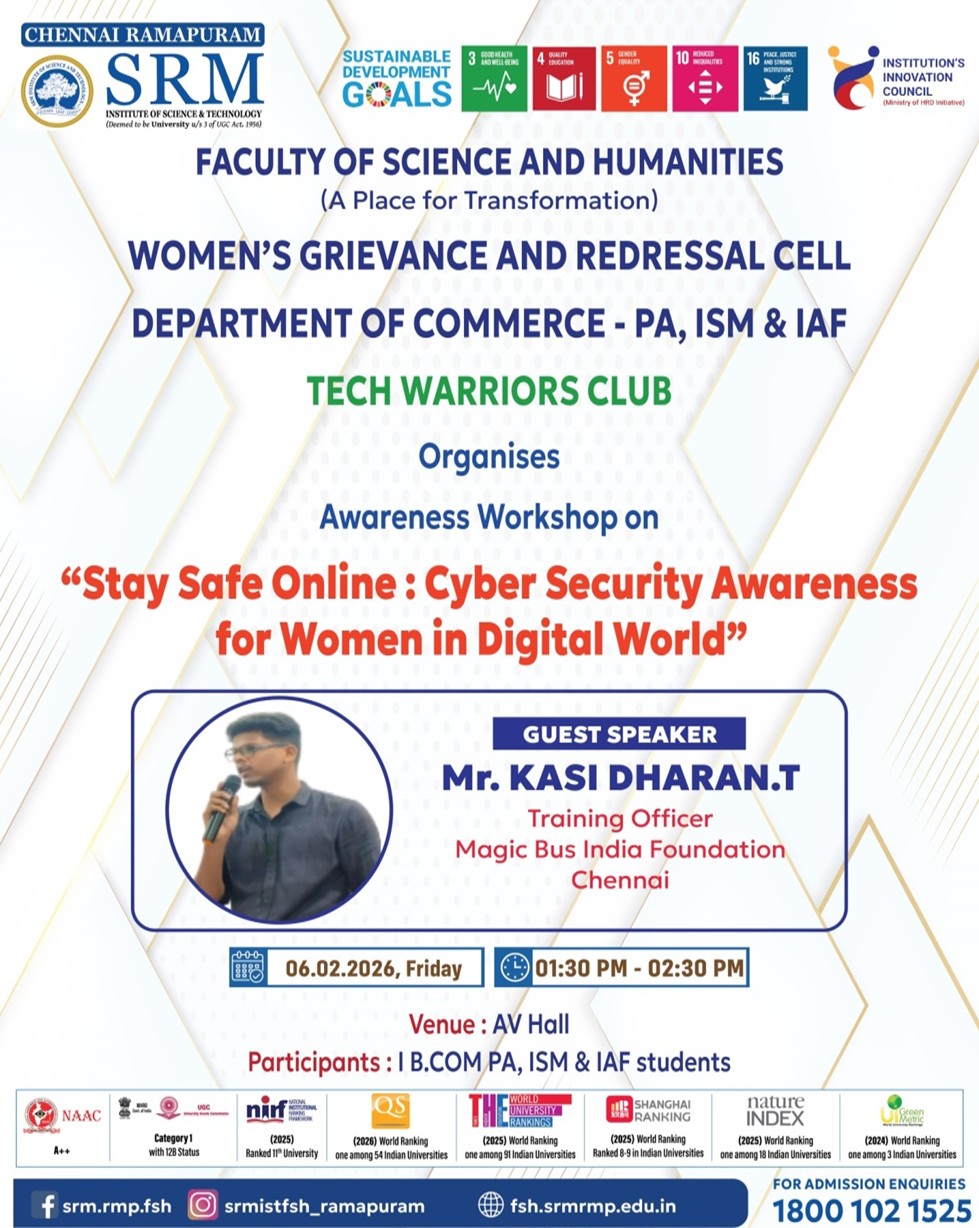
Event Title: “Stay Safe Online: Cyber Security Awareness for Women in the Digital World”
Date: 6th February 2026
Time: 1:30 pm to 2:30 pm
Venue: Room no. 110, East block
Event Convener
Dr.K.Anitha – Assistant Professor
Head of The Department
Dr.D.Janis Bibiyana
Head of the Department of Commerce-PA, ISM ,IAF & SF
Distinguished Chief Guest
Mr. Kasi Dharan T
Training Officer specialist in the Programme Operations
Magic Bus India Foundation in Chennai.
Summary Of The Event
The Women’s Grievance Cell of the institution organized an awareness-oriented programme to educate students about women’s rights, safety measures, legal provisions, and the institutional grievance redressal mechanism. The session emphasized the importance of creating a safe, respectful, and inclusive campus environment for women. Students were sensitized to various forms of harassment, discrimination, and gender-based issues, and were informed about the procedures for reporting grievances confidentially. The programme encouraged open interaction, built awareness about support systems available within the institution, and reinforced the institution’s commitment to ensuring gender equity and women empowerment.
Key takeaways
- Students gained awareness about the role and functions of the Women’s Grievance Cell within the institution.
- Enhanced understanding of women’s rights, safety measures, and legal protections against harassment.
- Awareness was created on different types of grievances and the proper procedure for confidential reporting.
- The programme promoted a culture of respect, gender sensitivity, and mutual understanding on campus.
- Students were encouraged to speak up, seek support, and actively contribute to a safe and inclusive learning environment.
Sustainable Development and Growth Mapping:
Outcome of The Program: (Based of SDG)
SDG 3 – Good Health and Well-being
The program significantly contributed to promoting good health and well-being by focusing on physical, mental, and emotional health awareness among participants. It highlighted the importance of stress management, emotional resilience, and maintaining a healthy work–life balance, especially in an academic environment. Through interactive discussions and awareness sessions, participants were encouraged to adopt healthy habits, seek timely medical and psychological support, and support peers in need. This initiative helped in creating a positive, safe, and health-conscious campus culture that prioritizes overall well-being.
SDG 4 – Quality Education
In line with SDG 4, the program enhanced quality education by extending learning beyond academic curriculum and fostering value-based education. It improved awareness, critical thinking, and ethical understanding among students, enabling them to connect theoretical knowledge with real-life social issues. The program encouraged active participation, inquiry-based learning, and informed decision-making, thereby nurturing responsible and informed citizens. Such initiatives strengthen holistic education and contribute to continuous personal and professional development.
SDG 5 – Gender Equality
The program actively supported gender equality by creating awareness about women’s rights, gender sensitivity, and the importance of a safe and respectful environment. It empowered women participants by encouraging confidence, self-expression, and knowledge of institutional support systems. At the same time, it sensitized all participants to issues such as discrimination, harassment, and unconscious bias. The initiative reinforced the need for equal opportunities, mutual respect, and shared responsibility in building an inclusive and gender-sensitive society.
SDG 10 – Reduced Inequalities
Addressing SDG 10, the program emphasized inclusiveness and equity by promoting equal access to opportunities, resources, and grievance redressal mechanisms. It highlighted the importance of eliminating discrimination based on gender, background, or socio-economic status within educational institutions. Participants gained awareness about fairness, empathy, and social justice, fostering a culture of respect and equality. The program contributed to reducing institutional and social inequalities by encouraging inclusive practices and collective responsibility.
SDG 16 – Peace, Justice, and Strong Institutions
The program aligned with SDG 16 by strengthening awareness about peace, justice, and the role of strong institutional systems. It highlighted the importance of transparency, ethical governance, and effective grievance redressal mechanisms in maintaining trust and accountability. Participants were educated about their rights, responsibilities, and the procedures for addressing grievances constructively. This initiative fostered a sense of security, fairness, and confidence in institutional processes, thereby contributing to a peaceful and just academic environment.
Conclusion
The program, with the active involvement of the Women’s Grievance Cell, effectively addressed key issues related to safety, equality, well-being, and justice within the institution. It created awareness about women’s rights, available grievance redressal mechanisms, and the importance of reporting and resolving issues in a fair and confidential manner. By aligning with the Sustainable Development Goals, the initiative strengthened health and well-being, promoted quality and inclusive education, reduced inequalities, and reinforced peace, justice, and strong institutional practices. Overall, the program empowered participants with knowledge and confidence, fostering a secure, respectful, and supportive campus environment.